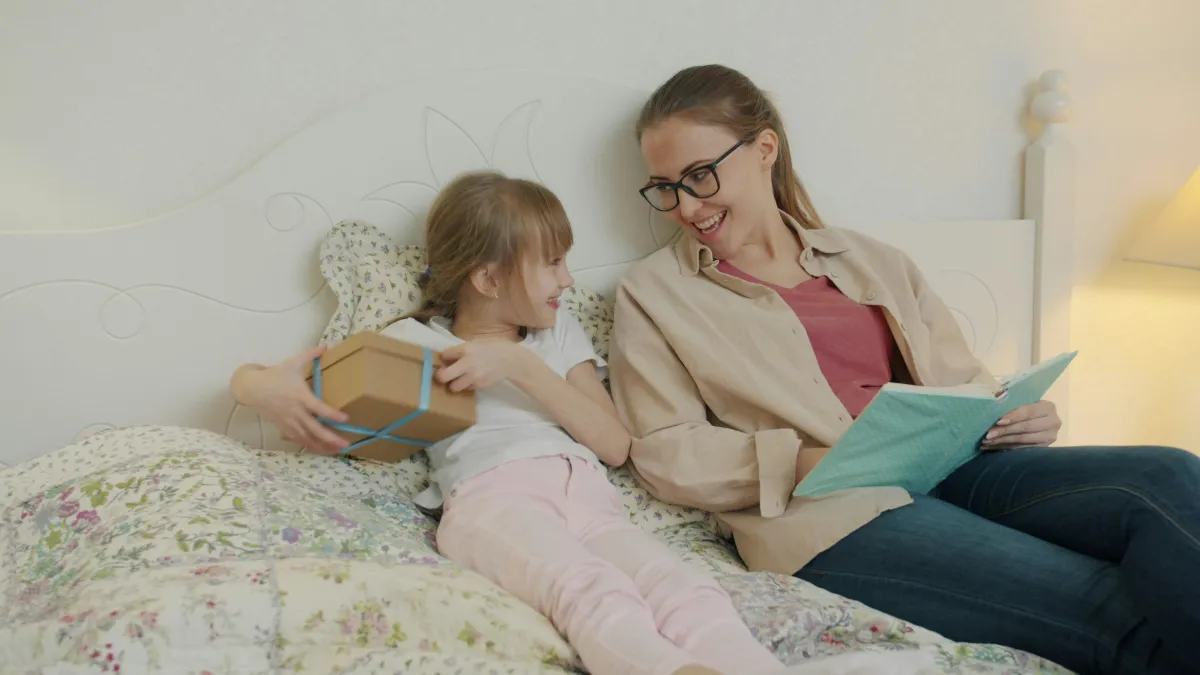
How to Help Your Kids Feel Safe Expressing Their Feelings
A while back I walked into my daughter's room and saw something written in dry erase marker across her mirror. Love myself. She is ten. Nobody asked her to write it.
I stood there longer than I probably needed to, because it made me realize something I had not fully put into words before. My kids are not learning emotional safety from a single conversation I had with them once. They are learning it from watching how I handle my own feelings, every single day, whether I mean to be teaching anything in that moment or not.
What emotional safety actually means, day to day
It is easy to talk about emotional safety in the abstract. In practice, it is much smaller and much more constant than a single big talk about feelings.
It is what happens when a child says something big and uncomfortable, and instead of shutting it down to keep the peace, you let it exist in the room for a second before responding. It is not punishing big emotions just because they are inconvenient in the moment. It is naming what you see instead of dismissing it. You seem really frustrated right now, instead of stop being dramatic.
None of this means never setting limits. It means the limits come after the feeling has been allowed to exist, not instead of it.
What I actually do at home
The biggest shift for me was modeling my own self-talk out loud, in front of my kids, even on hard days. Not performing perfect calm. Actually narrating the real thing, in an age-appropriate way. I am feeling really overwhelmed right now, and I am going to take a breath before I respond. That sentence, said honestly, teaches more than any lecture about feelings ever could.
I also try to name emotions instead of rushing to fix or dismiss them. When my son is disappointed about something small, I resist the urge to immediately talk him out of the feeling. That sounds really disappointing. I get it. Sometimes that is the whole conversation. He does not need me to solve it. He needs to know the feeling itself was allowed.
The mirror as a tool, not just a moment
That same daughter also has a list of her dreams taped to her mirror, something we built together a while back. Every morning while she gets ready, she reads it. I did not do this to raise a mini motivational speaker. I did it because I wanted her mirror to reflect back more than just her face. I wanted it to also reflect what she is allowed to want, and who she is becoming.
It is a small practice. But I think small, repeated practices are exactly what shape a child's inner voice over time, far more than any single big conversation.
This is not about perfect parenting
I want to be honest. I am not doing any of this flawlessly. There are days the old patterns win, days I snap first and repair later, days I am too tired to model anything except being tired.
But I think that is actually part of the point. Emotional safety does not require a parent who never struggles. It requires a parent who keeps showing up, keeps repairing, and keeps making it clear that a child's inner world, all of it, the good feelings and the hard ones, matters here.
Juliana 💕
---
Find me on Instagram at @dreamcatchermamas. See My Resources.


